AI Professional Headshots in 2026: How They Work, What They Cost, and Which Platform to Use
Matthieu van Haperen
Founder & CEO, TeamShotsPro · Updated Jan 2026
TL;DR: Quick Answer
AI headshot generators create studio-quality professional portraits from a selfie in under 60 seconds. They cost $19.99–$59 for individuals (vs. $200–500 for traditional photography) and as low as $10.49/person for teams. The technology uses GANs and diffusion models to render new photos, not filters, from your facial data. Most recruiters can't tell the difference from traditional photos. The main weaknesses are accessories (glasses, jewelry) and over-smoothed skin on cheaper platforms. For platform comparisons, see our 8-platform review. For corporate rollout guidance, see our corporate implementation guide.
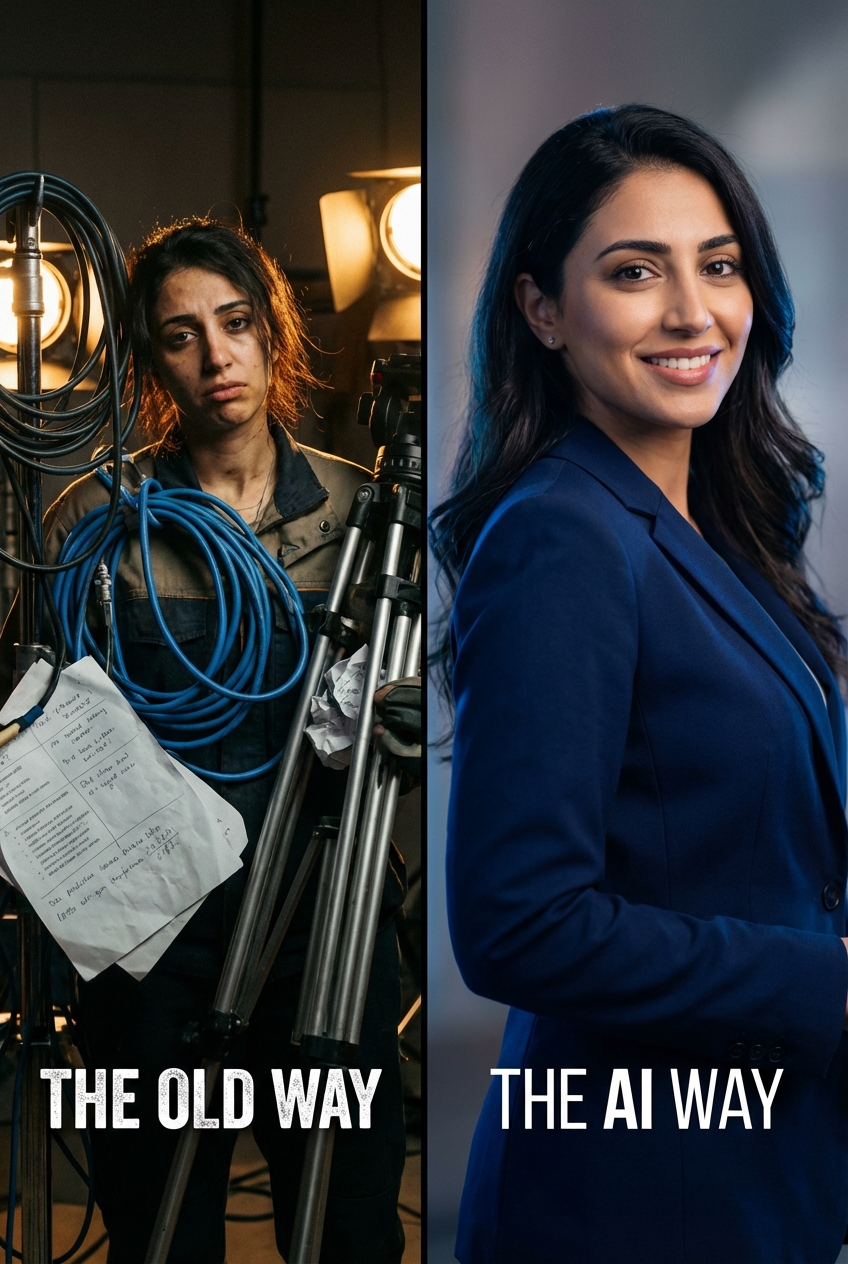
AI headshot generators turn a selfie into a studio-quality professional portrait in minutes — no photographer, no studio, no scheduling. In 2026, the technology has matured to the point where the majority of recruiters can't distinguish AI-generated headshots from traditional photography, and adoption has gone mainstream across tech, consulting, finance, and healthcare.
This guide covers what you need to know before using one: how the technology works, where it fits in your professional life, and where to go for deeper detail on specific topics like platform comparisons, corporate implementation, and cost analysis.
What Are AI Professional Headshots?
AI professional headshots are portraits generated by machine learning models trained on large datasets of studio photography. You upload one or more selfies, and the platform produces new images that look like they were taken by a professional photographer — controlled lighting, clean background, polished presentation.
They're not filters. Filters modify your existing photo. AI headshot generators create entirely new images based on your facial structure, then render them in a professional photography style. The output is a new photo that looks like you sat for a studio session.
Who uses them: job seekers updating LinkedIn profiles, companies standardizing employee photos across departments, real estate agents refreshing listing headshots, executives needing consistent imagery across speaking bios and press kits, and remote teams that can't coordinate an in-person photo shoot. How many people use AI headshots: As of 2026, platforms like HeadshotPro alone have generated over 17.9 million headshots. The market has moved from early-adopter curiosity to mainstream professional tool, particularly in tech, consulting, financial services, and healthcare where remote work has made traditional photo coordination impractical. Industry adoption varies significantly: In tech and startups, AI headshots are the default, most companies don't even discuss whether to use them. In consulting and financial services, adoption is high but disclosure practices differ. In healthcare and law, traditional photography still dominates for senior-facing roles, though AI is gaining ground for internal directories and associate-level profiles. For a detailed breakdown of expectations and acceptance by industry, see our industry-specific headshot guide. Professional acceptance: LinkedIn profiles with professional headshots receive up to 21x more profile views. In a 2025 industry survey, the majority of recruiters could not distinguish high-quality AI headshots from traditional photography. The technology has reached the point where the quality floor, the worst output from a decent platform, exceeds what most people get from a quick smartphone photo. What they cost: Individual headshots range from $19.99 to $59 depending on the platform. Team pricing drops as low as $10.49 per person at volume. Traditional studio photography runs $200–500 per person before travel and coordination costs. For a full cost breakdown, see our professional headshots cost guide.How AI Headshot Technology Works
Understanding the basics helps you evaluate platforms and set realistic expectations about what AI can and can't do.
The generation process
Modern AI headshot generators use a combination of two technologies: GANs (Generative Adversarial Networks) and diffusion models. Here's how the process works in practice:
Step 1 — Upload. You provide 1–15 selfies depending on the platform. Some platforms (like TeamShotsPro) need just one photo. Others (like Secta Labs) require 15+ to build a more detailed model of your face. Step 2 — Facial analysis. The AI maps your facial geometry: bone structure, skin tone, hair texture, eye color, facial proportions. This creates a mathematical representation of what you look like. Step 3 — Style generation. The model places your face into professional photography templates — applying studio lighting, neutral backgrounds, and appropriate attire. The diffusion model generates the final image by iteratively refining noise into a photorealistic portrait. Step 4 — Output. You receive a batch of variations (anywhere from 3–4 to 200+ depending on the platform) and pick the ones that look most like you.What the AI handles well
The technology has gotten reliably good at the core elements of a professional headshot: facial rendering, natural-looking lighting, clean backgrounds, and consistent skin tones. For a standard corporate headshot — head and shoulders, neutral background, business attire — the best platforms produce results that are indistinguishable from traditional photography at typical LinkedIn and website resolutions.
Where the AI still struggles
Accessories remain the biggest weakness. Earrings, necklaces, glasses frames, and tie clips frequently show artifacts — warping, asymmetry, or melting into surrounding features. Hands are also problematic if they appear in the frame. Hair edges (especially curly or textured hair) can show unnatural blending with the background. And some platforms over-smooth skin to the point where results look obviously artificial.
These limitations are important to understand because they determine which AI-generated photos you should use and which you should skip. The best practice is to generate a batch and critically evaluate each one rather than using the first result.
AI Headshots vs Traditional Photography: The 2026 Reality
The decision between AI and traditional photography comes down to three factors: quality requirements, budget, and logistics.
Quality: For standard corporate headshots — head and shoulders, neutral background, professional attire — the best AI platforms produce results indistinguishable from studio photography at web and LinkedIn resolutions. Traditional photography still wins for editorial-quality images, specific location shots, or situations requiring props and precise art direction. Cost: AI headshots cost $19.99-$59 per person for individuals, dropping to $10.49/person at team volumes. Traditional studio photography runs $150-$600 per session before travel, coordination, and retouching. For a detailed breakdown by city and team size, see our 2026 headshot cost guide. Speed and logistics: AI headshots generate in 60 seconds from a single selfie. Traditional photography requires scheduling, travel, a 30-60 minute session, and 1-3 weeks for editing and delivery. For remote teams or companies with multiple offices, the logistics gap is enormous.| Factor | AI Headshots | Traditional Photography |
|---|---|---|
| Cost per person | $10.49-$59 | $150-$600 |
| Time to final photo | 60 seconds | 1-3 weeks |
| Scheduling required | None | Yes |
| Location dependent | No | Yes |
| Brand consistency | Automatic | Requires same photographer |
| Best for | LinkedIn, corporate directories, team pages | Executive portraits, editorial, marketing campaigns |
Professional headshots from $10.49
Upload a selfie. Get studio-quality headshots in 60 seconds.
Upload a Selfie → Get Team HeadshotsUsing AI Headshots on LinkedIn
LinkedIn is where AI headshots deliver the most measurable impact. Profiles with professional photos receive up to 21x more views and 36x more messages than those without. In 2026, the majority of LinkedIn headshots in tech, consulting, and financial services are AI-generated — whether or not users disclose it.
What LinkedIn looks for in a profile photo:
- Minimum 400×400 pixels (AI platforms typically output 1024×1024 or higher)
- Head and shoulders framing with your face taking up about 60% of the frame
- Clean, uncluttered background — solid colors or soft gradients work best
- Current appearance — LinkedIn's algorithm surfaces recent activity, and a photo that doesn't match your video calls creates cognitive dissonance
For a detailed comparison of which AI platforms produce the most LinkedIn-optimized results, see our 8-platform review
- AI Headshots vs Photographer
- Are AI Headshots Safe?. For tips on posing and expression, see our professional headshot tips guide.
Deep Dives: Explore Each Topic
Which AI Headshot Platform Should I Use?
We tested 8 platforms with the same source photos and scored them on quality, speed, pricing, and team features. If you're trying to decide which platform to use, start here. Read: Best AI Headshot Generator 2026: 8 Platforms ComparedHow Do I Roll Out AI Headshots for My Company?
The step-by-step enterprise playbook: building the business case, running a pilot, setting brand guidelines, managing employee concerns, and scaling across locations. Written for HR leaders, brand managers, and IT teams. Read: How to Implement Corporate AI Headshots: The 2026 Enterprise PlaybookWhat Do Professional Headshots Actually Cost?
Complete pricing breakdown for AI and traditional photography by city, team size, and photographer type. Includes the hidden costs most people miss. Read: Headshot Costs 2026: $150-$600 Breakdown + Hidden FeesHow Do I Get Professional Headshots for My Whole Team? The complete guide to team headshots in 2026: strategy, cost comparison, brand consistency, and when to use AI vs. traditional photography. Covers teams from 5 to 500+ people. Read: Professional Team Headshots: 2026 Guide
How Do I Get the Best Results?
Detailed guidance on lighting, posing, clothing, and expression for both AI and traditional headshots. What to wear by industry and common mistakes to avoid. Read: Professional Headshot Tips: Studio-Quality ResultsWhat Does My Industry Expect?
Dress codes, background preferences, and AI acceptance levels for tech, finance, healthcare, legal, real estate, and creative fields. Read: Professional Headshots by IndustryHow Does the AI Generation Process Work?
From selfie upload to finished portrait in 60 seconds: face analysis, style application, image generation, and variant selection explained in plain language. Read: How Do AI Headshots Work? The Process Behind Selfie-to-Headshot in 60 SecondsHow Do AI Headshots Work for Small Teams? If you're a team of 5–25 people looking for a quick solution without enterprise complexity, this guide covers the essentials: choosing a platform, getting consistent results, and managing the process without dedicated IT or brand resources. Read: AI Headshots for Teams: Complete Company Photo Solution
Professional headshots from $10.49
Upload a selfie. Get studio-quality headshots in 60 seconds.
Upload a Selfie → Get Team HeadshotsRelated Guides
Explore our industry-specific guides:
- Free AI Headshot Generators in 2026: What You Actually Get for $0: Free AI Headshot Generators in 2026: What You Actually Get for $0
- AI Headshot Before and After: Real Results From Real Selfies (2026): AI Headshot Before and After: Real Results From Real Selfies (2026)
Frequently Asked Questions
What is an AI professional headshot?▼
An AI professional headshot is a portrait generated by machine learning models from one or more selfies you upload. The AI creates a new photo that looks like it was taken in a professional studio — with controlled lighting, a clean background, and a polished look. It's not a filter applied to your existing photo; it's an entirely new image based on your face.
Are AI headshots good enough for professional use in 2026?▼
Yes, for most professional contexts. The best platforms produce results that recruiters and colleagues can't distinguish from traditional studio photography. That said, quality varies significantly between platforms — some over-smooth skin or produce obvious artifacts. See our [8-platform comparison](https://www.teamshotspro.com/blog/ai-headshots-review-2026) for detailed quality assessments. In industries where authenticity carries extra weight (law, medicine, executive leadership), traditional photography may still be the safer choice for senior roles.
How is this different from using a photo filter?▼
Filters modify your existing photo — smoothing skin, adjusting colors, blurring the background. The original photo is still the base. AI headshot generators create entirely new images. The AI uses your facial structure as input and renders a new photo from scratch using professional photography conventions — studio lighting, appropriate attire, clean composition. The result is a photo that never existed before, not a touched-up version of a selfie.
Should I tell people my headshot is AI-generated?▼
There's no legal requirement to disclose in most contexts as of 2026, but attitudes vary by industry. In tech and marketing, AI headshots are widely accepted and often expected — disclosure is optional. In trust-dependent industries like financial advisory, law, and medicine, transparency tends to build rather than undermine credibility. If a client or employer asks directly, honesty is always the right call. For a detailed breakdown of detection risks and disclosure strategies by industry, see the [authenticity section](https://www.teamshotspro.com/blog/ai-headshots-review-2026#the-authenticity-question-can-people-tell-these-are-ai) in our platform review.
Ready to get started with TeamShotsPro?
Generate professional AI headshots in 60 seconds.
Upload a Selfie → Get Team Headshots
About the Author
Founder & CEO, TeamShotsPro
Matthieu van Haperen runs TeamShotsPro, where he has helped hundreds of teams get professional AI headshots. Before founding TeamShotsPro, he spent 6+ years building and scaling tech startups. He writes about professional photography, team branding, and how AI is reshaping corporate imagery.
Connect on LinkedIn →