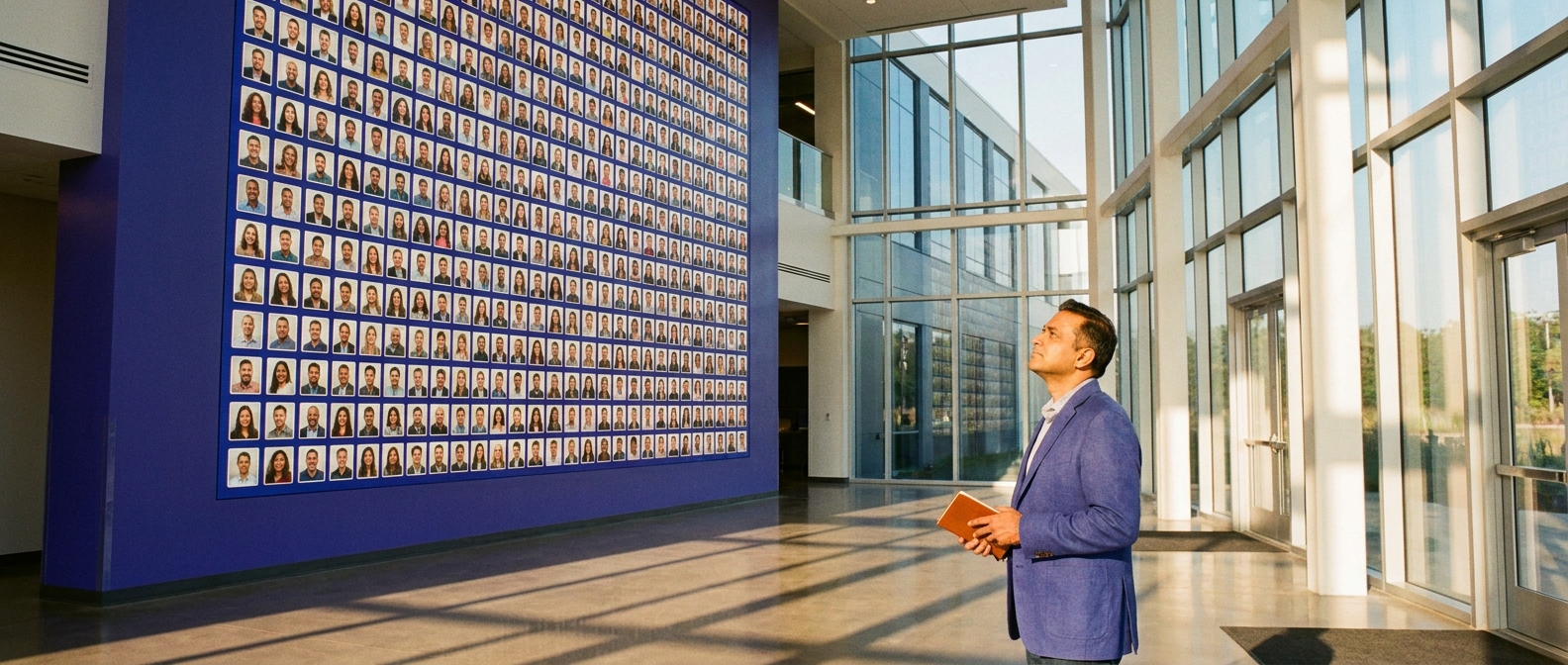
A work headshot is the photo your employer, colleagues, and clients see on the company site, the internal directory, your badge, and LinkedIn. What it should look like depends on your workplace register (formal, business casual, or creative). The standard is simple everywhere: current, clear, and consistent with how you show up to work. TeamShotsPro helps employers lock one style so every employee, including remote staff and new hires, gets matching photos from one clear selfie in about 60 seconds per image. Team pricing starts from $29.99 per seat, 8 photos per seat, minimum 2 seats, with a 14-day money-back guarantee on paid plans.
What a professional photo for work is
A professional photo for work is a current head-and-shoulders portrait that still looks like you on a workday. Colleagues, clients, and recruiting tools use it to recognize you on the company site, in proposals, and on LinkedIn. A vacation crop, a wedding photo, or a heavily filtered selfie fails that job. If the picture only works at full size and falls apart as a thumbnail, it is not ready.
The one rule that applies everywhere
Your work headshot has to look like you at work this year. Not you at a wedding five years ago, not a vacation crop, and not a heavily filtered version that surprises people in the first meeting. Recognition is the entire job of the photo: colleagues match the face in the directory to the person in the hallway, and clients match the face in the proposal to the person on the call. Everything else (attire, background, expression) is register.
If recognition fails, the photo is wrong even if lighting is beautiful.
What it should look like, by workplace
Formal workplaces (law, finance, consulting, executive functions): dark blazer or suit, composed expression with a slight smile, neutral studio-style background.
Business-casual workplaces (most of tech, healthcare admin, education, marketing): collared shirt or plain top without a jacket, warmer smile, neutral or softly blurred office background.
Creative workplaces: wider range and personality welcome, but fundamentals hold: clear light on the face, simple background, tight head-and-shoulders crop.
Casual employee headshots still have to be current, well lit, and tightly cropped. Casual means a plain top instead of a jacket, not a party photo. If the rest of the team wears collared shirts, a hoodie reads as the odd one out.
When in doubt, look at the team page you will appear on and match its register. Standing out stylistically on a uniform page reads as a mistake, not a statement.
Where a work headshot actually gets used
The same image typically lands in more places than anyone plans for:
- Public team page and About page
- Internal directory and chat avatar
- Email signature
- Badge systems
- Proposal and pitch documents
- Event and speaker bios
Headshots for new employees
New employee headshots should land in the directory the week someone starts, not at the next annual photo day. The photo has to match the rest of the team: same crop, same background family, same workplace register. Waiting months for a photographer visit is how new hires show up with a mismatched selfie. TeamShotsPro is built for that week-one case: one clear selfie per person, about 60 seconds per image, from $29.99 per seat with a 2-seat minimum and 8 photos each, one-time, money-back.
Portraits for networking
A professional portrait for networking is the same master image you use on LinkedIn, a conference badge, and a speaker bio. People you meet at events look you up the same day. If the photo on your profile does not match the person they just met, the connection dies. Keep one current file and reuse it. Do not invent a separate networking look unless your workplace register truly changes between the office and the event.