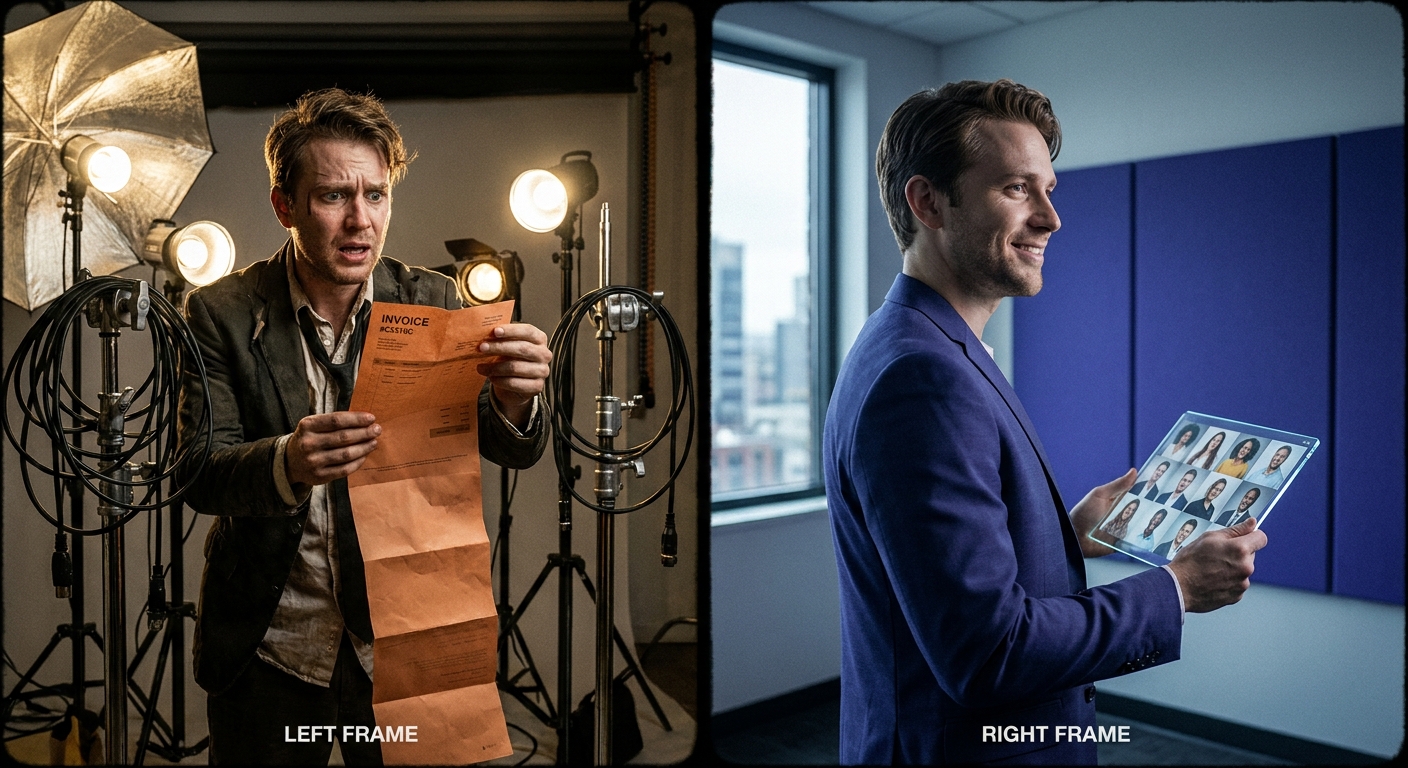
A corporate headshot photographer typically charges $200 to $500 per person for on-site team sessions, with day rates for larger shoots commonly landing in four figures. The right one earns that money through direction, consistency across your whole team, and clear usage rights. This guide covers what they charge, what an on-site session actually includes, how to pick a good one when the deadline is tight, the questions that prevent expensive surprises, and the case where you can skip the booking entirely.
If you are comparing routes for a company rollout, also read professional headshots cost and use the headshot cost calculator for headcount math.
What on-site headshot photography services manage
Professional headshot photography services for an on-site corporate session are production, not just a camera. The photographer or studio books a room, sets lighting that stays the same from the first person to the last, runs a queue so each person is in and out in 15 to 30 minutes, and delivers files sized for the website, LinkedIn, and print.
A typical day looks like this: morning setup, a call sheet with times, a holding area, and a backup slot for no-shows. The service includes direction (how to sit, where to look, what to do with glasses and hair) and a consistent crop. It does not automatically include culture shots, group photos, or people who join next month.
If the job is matching headshots for a distributed team, corporate headshots covers that block from $29.99 per seat, 8 photos each, minimum 2 seats, one-time, money-back, about 60 seconds per image after style is locked. Individuals who only need a personal LinkedIn photo should use Portreya: $4.99 for 2 photos from one selfie, one-time, with money-back. For the full shoot-day playbook, see how to run a corporate photoshoot.
Photographers for corporate teams on a tight timeline
The photographer worth hiring for a corporate team is not the one with the most wedding awards. It is the one who has delivered full team sets on a deadline: same lighting across forty faces, files in days not months, and a written plan for remote or sick people.
Tight timelines usually mean one to two weeks, not two months. Ask for a recent corporate delivery date, not a star rating. If they cannot show a complete team set delivered inside that window, they are the wrong hire for this job. Rush fees are common.
When the deadline is this week and people sit in different cities, a photographer day will not close it. TeamShotsPro returns matching files in about 60 seconds per image after an admin locks the look. Keep the photographer when you need the office, the culture shots, or a press portrait that will run large. Compare numbers on what team headshots cost, pricing, and the headshot cost calculator. For workplace look-and-feel, see work headshots.
What a corporate headshot photographer charges
Pricing comes in two shapes. Per-person rates, common for headshot-focused sessions, run $200 to $500 depending on market, experience, and how much retouching is included. Day rates, common when the shoot covers more than headshots, typically start around $1,500 to $2,500 in major markets and rise with the photographer's profile. Watch the lines that get added after the quote: retouching beyond an included count, rush delivery, travel beyond a radius, and licensing for uses beyond the website. None of those are dishonest, but they are where a $300-per-person quote becomes a $450-per-person invoice.
At team scale the photographer total climbs roughly with headcount. A 25-person day can still look manageable. A 100-person project at $200 to $500 per person is $20,000 to $50,000 before internal coordination, reshoots for absences, and the next round of new hires.
What a good one actually does
The photographer's real product is not the camera. It is direction and consistency. A good corporate photographer gets stiff, camera-shy employees to relax in under five minutes each, keeps lighting and framing identical from the first person to the fortieth, and delivers a set where the CFO and the newest hire look like they belong on the same page. They also handle the production reality: schedules, a backup plan for no-shows, and files delivered in the sizes your website and print materials actually need.